Quick Information

TICKETS

From $7.69

Plan your visit

Is São Paulo Zoo worth visiting?

São Paulo Zoo feels very different from most city zoos. You walk beneath dense Atlantic Forest canopy, hear tropical birds before spotting them, and move through forested paths that open onto jaguars, spectacled bears, maned wolves, elephants, and wide lakes surrounded by native vegetation.

The complex was built on four pillars that still shape the experience today: scientific research, conservation-focused education, breeding programs for endangered species, and leisure as a way of connecting urban residents with nature. That purpose is visible throughout the 47-hectare reserve.

The emotional payoff is discovering how biologically rich Brazil really is. Most visitors leave surprised by how much rainforest, wildlife, and quiet space exist within São Paulo's urban limits.

Skip it if you dislike long outdoor walks, humid weather, or slower nature-focused attractions. This experience rewards exploration without rushing.

What to see at São Paulo Zoo?

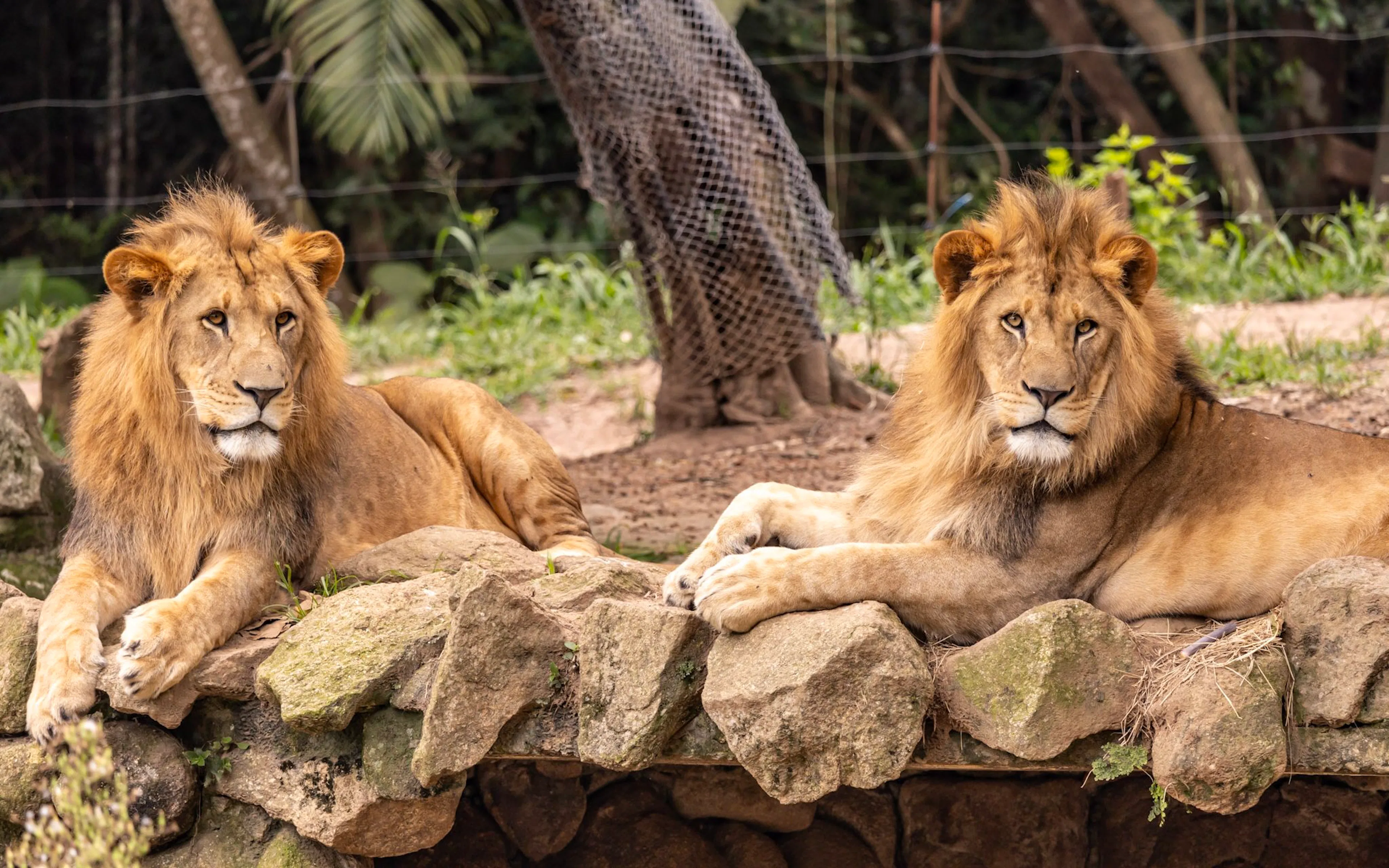
Lions resting on rocks at São Paulo Zoo.
Flamingos gathered at São Paulo Zoo.
Crocodile resting on sand at São Paulo Zoo during Simba Safari.
Safari vehicles lined up at São Paulo Zoo for Simba Safari tour.
Entrance of Jardim Botânico de São Paulo with greenery and ticket booth.
1/5

The Main Zoo Trail

The central walking route passes through shaded forest paths with elephants, giraffes, lions, jaguars, hippos, spectacled bears, chimpanzees, and primates. The surroundings feel surprisingly natural and immersive across more than 230 species of native and exotic animals.

Pro tip: Arrive before 10am for cooler temperatures and more active animals throughout the mammal sections.

Tropical Birds and Aviaries

One of the strongest parts of the zoo. Expect macaws, toucans, flamingos, and endangered Brazilian bird species in open-air habitats surrounded by thick tropical vegetation.

Pro tip: Early mornings are quieter here, and photographers usually head straight to this section before larger groups arrive.

Reptile and Amphibian Areas

Home to snakes, turtles, caimans, axolotls, and amphibians native to South American ecosystems. This section stays cooler during hotter afternoons and works well as a mid-visit break from the larger outdoor trails.

Simba Safari

Unlike the walking paths inside the zoo, Simba Safari uses guided safari vehicles that move through open wildlife areas with camels, deer, monkeys, lions, and grazing animals at close range. First opened in 1977, it is one of Brazil's earliest drive-through wildlife experiences.

Pro tip: Earlier safari sessions usually feel calmer and have shorter wait times than midday departures.

São Paulo Botanical Garden

The quieter side of the complex. Expect orchid collections, lakes, native Atlantic Forest trails, greenhouses, and long shaded walking paths. Many locals purchase the 12-month annual pass specifically for repeat weekend visits, photography, and birdwatching rather than single-day sightseeing.

Want to explore beyond the zoo paths?

Combine your visit with Simba Safari for close-up wildlife encounters or slow things down with rainforest trails and lakes inside the Botanical Garden.

Boat tour at São Paulo Zoo's aqua zoo with black swans in the water.

How to explore São Paulo Zoo?

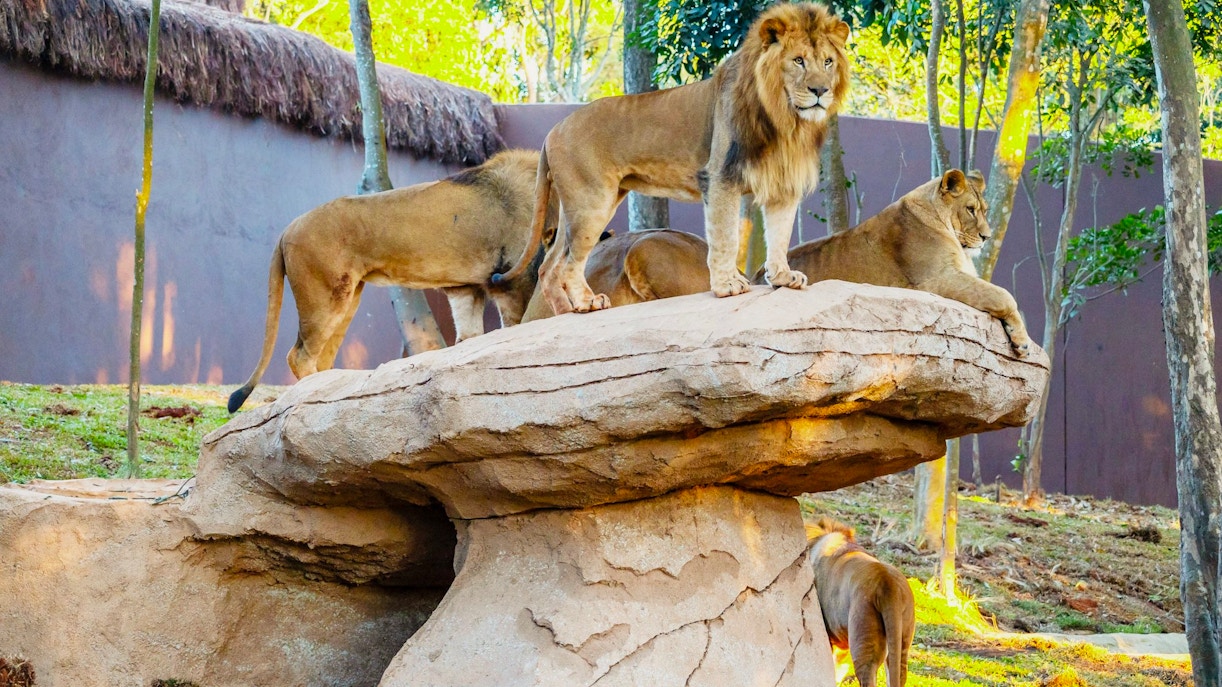
Lions on a rock formation at São Paulo Zoo during Simba Safari.

Budget at least a full day for São Paulo Zoo and even longer if you plan to include Simba Safari or the São Paulo Botanical Garden. The complex feels much larger in person because most routes involve shaded outdoor walking through Atlantic Forest terrain.

Suggested route: Start with the main zoo trail early when temperatures are cooler and animals are more active. Visit the aviaries, jaguars, elephants, and other large mammals first, then continue toward reptiles and quieter lake areas before lunch. If you are including Simba Safari, book an early vehicle session before queues grow later in the day. Leave the Botanical Garden for a slower-paced finish focused on trails, lakes, and greenhouse areas.

Must-see: Jaguars, tropical aviaries, native Brazilian wildlife, Simba Safari, and the Botanical Garden lake areas.

Optional: Revisit the aviaries later in the afternoon when crowds thin slightly and lighting improves for photography.

Self-paced visits work best here because the pathways are straightforward and designed for slower exploration rather than structured touring.

Pro tip: Many locals visit the Botanical Garden separately instead of trying to combine the entire complex into one rushed afternoon.

Brief history of São Paulo Zoo

1957: Governor Jânio Quadros, in partnership with Emílio Varoli, director of the Department of Hunting and Fishing, begins planning a major zoological park inside São Paulo's protected Atlantic Forest reserve.

1958: São Paulo Zoo officially opens with 482 animals, including jaguars, ocelots, deer, parrots, and a rhino named Cacareco, who later became a cultural icon after being symbolically elected city councillor in 1959.

1970s to 1990s: The zoo expands habitats, breeding programs, veterinary facilities, and conservation initiatives involving endangered South American species.

1977: Simba Safari opens beside the zoo, becoming one of Brazil's earliest safari-style wildlife attractions.

Early 2000s: The safari experience operates under the Zoo Safari name with expanded visitor infrastructure.

Recent years: Simba Safari is revitalized under its original name, while Acqua Zoo and Mundo Dino are added to the complex. The Botanical Garden continues to develop protected Atlantic Forest trails and educational spaces.

Present: Zoo São Paulo spans 47 hectares, is home to 230 species, and holds membership in WAZA, EAZA, and ALPZA while maintaining ISO 9001, ISO 14001, and ISO 45001 certifications.

Conservation and insider tips before visiting

Zoo São Paulo is an active member of WAZA, EAZA, AZAB, and ALPZA and holds 13 Technical Cooperation Agreements with universities and conservation institutions across Brazil. It was also the first institution in Latin America to achieve ISO 14001 environmental certification.

Most visitors underestimate both the humidity and walking distances across the 47-hectare complex. Comfortable shoes, light clothing, sunscreen, and water make a noticeable difference, especially during warmer months.

An insider tip many tourists miss: weekdays feel dramatically calmer than weekends, particularly around Simba Safari. Arriving early and prioritizing the main zoo sections before midday creates the best overall experience across wildlife viewing and queue times.

Frequently asked questions about São Paulo Zoo

Yes, especially if you enjoy outdoor wildlife experiences instead of compact indoor attractions. The combination of rainforest-like walking trails, large animal habitats, Simba Safari, and the Botanical Garden creates a full-day experience that feels very different from most urban zoos.